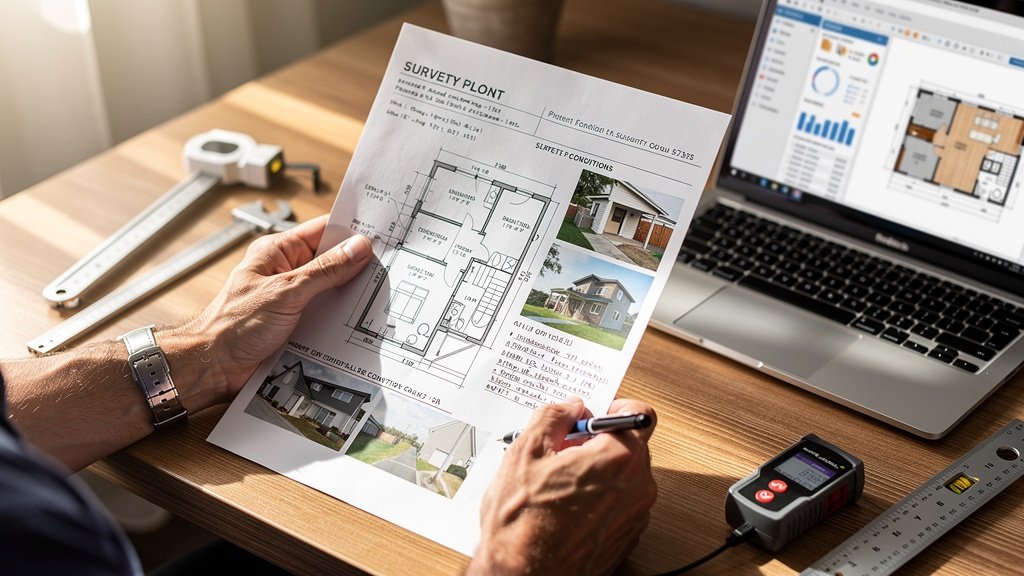
Your RICS building survey report has arrived. It's 40 pages long. There are tables, numbers, photographs, and technical terms you've never seen before. Your heart is racing. Take a breath — this guide will walk you through exactly what to do.
Step 1: Don't Panic
The first thing to understand is that a longer report is generally a good sign — it means your surveyor has been thorough. It doesn't necessarily mean the property is falling apart. Most survey reports contain a mixture of routine maintenance observations, minor defects, and (usually a smaller number of) more significant findings.
At Bradford Shipley Surveyors, we always include an executive summary at the front of our reports. Read this first. It gives you the overall picture before you dive into the detail.
Step 2: Focus on the Condition Ratings
For RICS Level 2 surveys, every element is rated 1, 2, or 3:
- Condition 1 (Green): No action needed now. Routine maintenance only.
- Condition 2 (Amber): Needs attention — not immediately urgent, but shouldn't be ignored indefinitely.
- Condition 3 (Red): Urgent or serious. Requires action before or shortly after you move in.
Make a list of all Condition 3 items. These are your priority. Read the surveyor's description of each one carefully — what the defect is, what they think is causing it, and what action they recommend.
Step 3: Don't Overlook the Legal Issues Section
Every survey report includes a section specifically for legal issues — items to pass to your solicitor. These might include:
- Evidence of extensions or alterations that may require planning permission or building regulations approval
- Potential boundary issues
- Flood risk or mining search recommendations
- Rights of way affecting the property
- Chancel repair liability
Forward this section to your solicitor and ask them to advise. These issues may not affect your decision to proceed, but your solicitor needs to know about them.
Step 4: Get Quotes for Significant Works
For any Condition 3 items, and for significant Condition 2 items, consider getting quotes from relevant contractors before you commit to exchange. This gives you real numbers to work with and may provide the basis for a price renegotiation — see our guide on how to negotiate using your survey report.
Step 5: Call Your Surveyor
This is the step that most buyers forget. Your surveyor is the person who physically inspected the property. They've seen it. They know it. A good surveyor should be available to talk you through the key findings — and at Bradford Shipley Surveyors, we always are.
Questions to ask your surveyor:
- "What do you consider the most significant findings in this report?"
- "In your professional opinion, are any of the Condition 3 items deal-breakers?"
- "What's your rough estimate for the cost of the most significant repairs?"
- "Are there any areas you were unable to inspect that you'd recommend investigating further?"
Commissioning a survey in West Yorkshire?
At Bradford Shipley Surveyors, we always talk you through your report after delivery. See our survey services.
Get a Free Quote