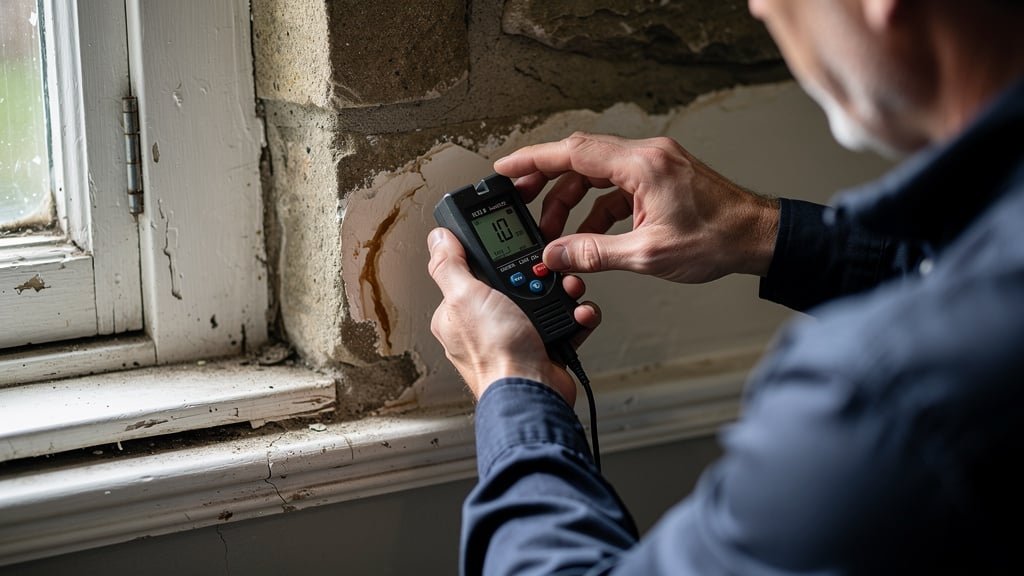
Damp is the word that strikes fear into the hearts of property buyers. And in West Yorkshire — with its wet climate, older housing stock, and prevalence of porous sandstone construction — it's something our Bradford Shipley Surveyors team encounters on a regular basis. But not all damp is the same. Here's what you need to know.
The Different Types of Damp
When a surveyor talks about "damp," they might be referring to several quite different conditions — each with different causes, different implications, and different costs to address. Confusing them leads to unnecessary fear or, worse, unnecessary expense on treatments that won't solve the underlying problem.
1. Penetrating Damp
Penetrating damp occurs when water enters the property from the outside — through defective pointing, cracked render, failed flashings, blocked gutters, or simply through a saturated porous stone wall during prolonged wet weather. It's very common in West Yorkshire's older sandstone properties.
Signs: Damp patches on internal walls that worsen during or after rain; salt deposits (efflorescence) on external masonry; dark staining on internal plasterwork.
Solution: Identify and remedy the source of water ingress first — repointing, replacing flashings, clearing gutters, repairing render. Once the source is dealt with, affected plaster is replaced. Costs range from a few hundred to several thousand pounds depending on extent.
2. Rising Damp
Rising damp is the classic — and most misdiagnosed — form of damp. It's caused by groundwater being drawn up through the masonry by capillary action, in the absence of (or failure of) an effective damp proof course (DPC). True rising damp is relatively uncommon and is characterised by a "tide mark" on the internal plaster at around 1m above floor level.
Important note: Many properties sold with "rising damp" actually have penetrating damp or condensation that has been misdiagnosed. A proper investigation by a qualified building surveyor is essential before any treatment is carried out.
3. Condensation Damp
Condensation is the most common form of damp in UK homes — and is frequently misidentified as rising damp by unqualified damp contractors with a financial interest in diagnosing a more "serious" problem. It's caused by warm, moist air meeting cold surfaces, causing water vapour to condense on walls and ceilings.
Signs: Black mould on external walls, particularly in corners; condensation on windows; musty smell; worst in bathrooms, kitchens, and bedrooms.
Solution: Improved ventilation, extraction fans, and sometimes better heating or insulation. Rarely requires expensive remediation.
What Our Surveyors Look For
When carrying out a Level 3 Building Survey, our surveyors use calibrated electronic moisture meters to measure moisture content in walls at multiple points. We also use thermal imaging cameras to identify cold spots that indicate moisture penetration that isn't yet visible to the naked eye.
We always aim to identify the source of any dampness, not just its presence. This distinguishes a properly conducted survey from the kind of cursory "damp inspection" carried out by many damp treatment companies — who often identify rising damp in properties that don't actually have it.
Damp Red Flags When Viewing a Property
Before you even commission a survey, here are the warning signs to look for when viewing a property:
- Fresh wallpaper or new paint in unusual patterns or locations
- Unusual smell (musty, earthy)
- Salt deposits on external masonry
- Black mould in corners of rooms
- Dehumidifiers running during viewing (often a red flag that damp is being managed rather than addressed)
- Freshly plastered patches on walls
How Much Does Damp Treatment Cost?
Costs vary widely depending on the type of damp and the extent of the problem:
- Penetrating damp repairs (repointing, flashings): £500–£3,000
- Rising damp DPC injection and replastering: £2,000–£8,000
- Condensation management (ventilation, extraction): £200–£1,500
- Extensive replastering following any damp treatment: £1,000–£5,000+
Worried about damp in a property you're buying?
A thorough Level 3 Building Survey from Bradford Shipley Surveyors will give you the real picture — and the information you need to negotiate or proceed with confidence.
Get a Free Quote