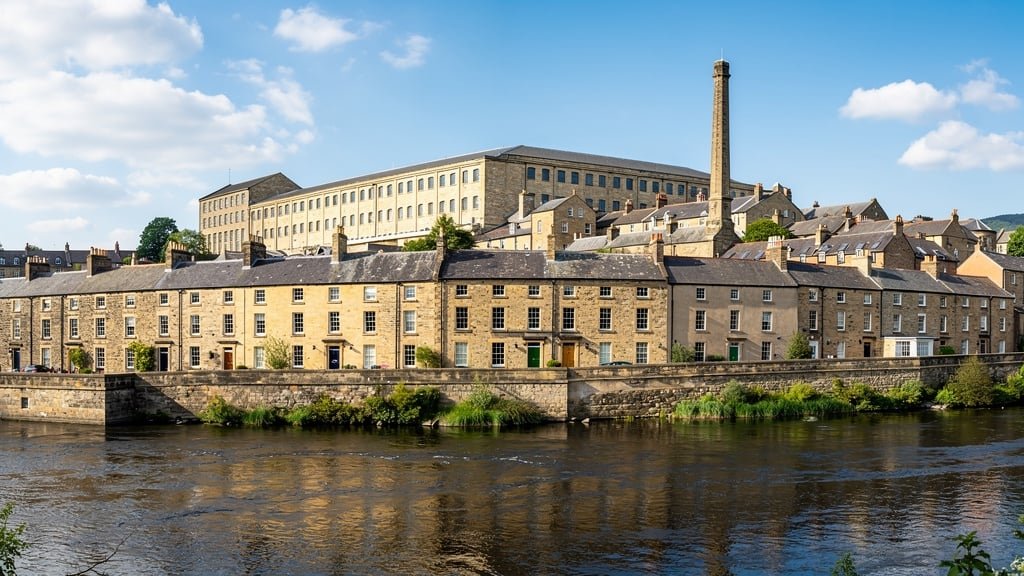
Saltaire is one of the jewels of West Yorkshire's architectural heritage — and one of the areas where Bradford Shipley Surveyors carry out some of our most specialist and rewarding work. Buying a property here is genuinely exciting. But it comes with a unique set of considerations.
About Saltaire
Saltaire is a Victorian model village built by industrialist Sir Titus Salt between 1851 and 1876, situated on the banks of the River Aire in what is now the Shipley district of Bradford. The entire village was designated a UNESCO World Heritage Site in 2001, reflecting its outstanding universal value as an exceptionally well-preserved example of a planned Victorian industrial settlement.
The village contains over 800 houses — all built to a consistent architectural standard in the local sandstone, with uniform front elevations, similar internal layouts, and the distinctive architectural language of the mid-Victorian period. They are beautiful, characterful, and historically significant. They are also, to state the obvious, between 150 and 175 years old.
Why Saltaire Properties Need Specialist Surveys
Saltaire properties are unique — and their survey needs reflect that. As part of a UNESCO World Heritage Site, they sit within a heritage protection framework that affects what alterations can and cannot be made, what materials can be used in repairs, and what consents are needed for any changes to the buildings.
At the same time, these are genuinely old properties — the oldest are now 170 years old — and they show their age in ways that require specialist knowledge to properly assess. Our senior surveyor Sarah Thornton has extensive experience surveying Saltaire properties and is one of the few surveyors in the Bradford area with specific knowledge of the heritage constraints that apply.
Common Survey Issues in Saltaire Properties
Our Level 3 Building Surveys on Saltaire properties routinely identify:
- Sandstone weathering: The local sandstone used to build Saltaire has weathered significantly in many properties, with surface erosion, spalling, and permeability issues affecting the external face of walls
- Penetrating damp: As with all sandstone buildings of this age, penetrating damp through the walls is common, particularly on north-facing and exposed elevations
- Chimney issues: Every property has multiple chimney stacks — many are original and in various states of repair
- Roof coverings: Many properties still have original or early-replacement Welsh slates approaching or beyond the end of their serviceable life
- Internal layout restrictions: Heritage controls limit structural alterations, which affects both what work can be done and how
- Flood risk: The proximity to the River Aire means that some properties, particularly those on lower ground near the riverside, may be subject to flood risk assessments
Heritage Constraints: What You Need to Know
Properties within the Saltaire World Heritage Site are subject to planning constraints that are more onerous than standard conservation area controls. Any alterations to the external appearance of a property — including changes to windows, doors, roofing materials, and external finishes — will require prior approval from Bradford Council's heritage planning team.
This has practical implications for buyers. If your survey identifies, for example, that the original single-glazed sash windows need replacing, you won't be able to simply install standard double-glazed units. You'll need to use heritage-compliant secondary glazing or specially made slimline double-glazed sashes. This typically costs significantly more than a standard window replacement.
Our surveys always flag the heritage constraints relevant to any identified defects, so you go into the purchase fully informed about both the defects and the constraints on how they can be remedied.
Our Advice for Saltaire Buyers
If you're considering buying in Saltaire, here's our honest advice:
- Always commission a Level 3 Building Survey. Given the age, construction, and heritage status of these properties, a Level 2 is simply not sufficient.
- Choose a surveyor with genuine heritage expertise. Not all surveyors have experience of heritage and listed building surveys. Ask specifically about this.
- Factor heritage-compliant repair costs into your budget. Repairs using appropriate materials and methods cost more. Build a realistic maintenance budget from the outset.
- Speak to Bradford Council's heritage planning team early. If you're considering any alterations or extensions, get informal pre-application advice from the heritage planning team before committing.
"I was overwhelmed when I first thought about buying in Saltaire — the heritage protections seemed very complex. Sarah at Bradford Shipley Surveyors made everything clear. Her Level 3 survey was incredibly detailed, and she flagged the specific heritage constraints relevant to our property's defects. We went in knowing exactly what we were dealing with." – Saltaire buyer
Buying in Saltaire or another heritage area?
Get a specialist Level 3 Building Survey from Bradford Shipley Surveyors. We have genuine expertise in heritage and Saltaire properties.
Get a Free Quote